The Mold Garden (2024)
Monotypes on stonehenge, and vinyl lettering. Spreads are 55” x 70”
The text in this project is a collaboration between Dr. Tamar Shirinian, a cultural anthropologist, and Sue Carrie Drummond, a visual artist. Shirinian contributed the main text as an autoethnography. Drummond edited the main text and wrote the footnotes based on research into how to manage mold in the home as well as the effects of mycotoxins on the brain. Drummond created all imagery and structures for this project.
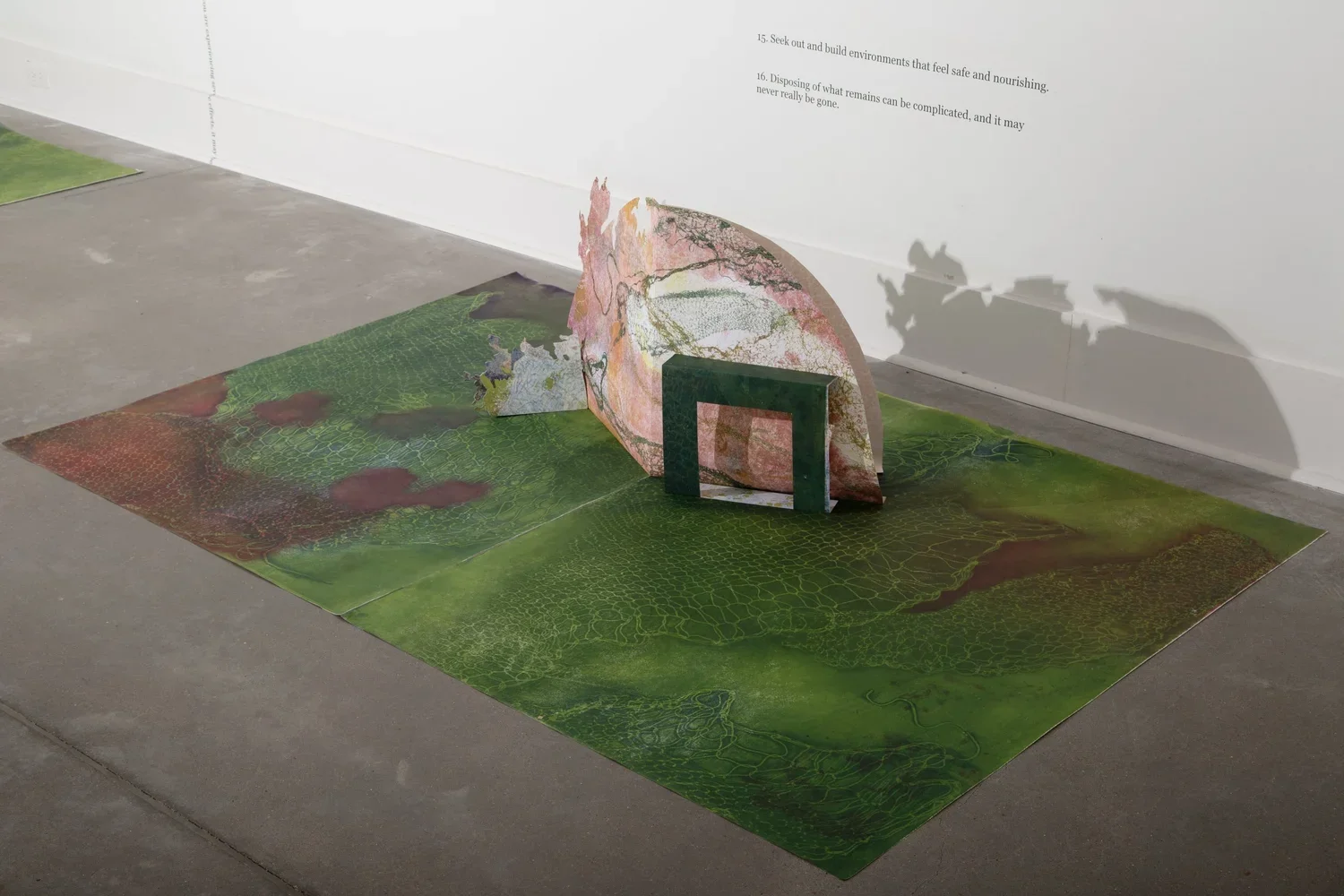
The Mold Garden is a narrative installation that uses mold as a metaphor for grief—both creeping, decomposing forces that can transform or overtake. Like grief, mold thrives in dark, neglected spaces, breaking things down in order to metabolize what’s left behind. It can be generative, making way for something new, or it can consume entirely.
Structured as a deconstructed artist’s book, the exhibition unfolds through large-scale pop-ups and sculptural spreads that sprawl across the floor. Early sections offer blueprints and grounded, architectural forms—a visual logic that mirrors a psyche still intact. But as the story progresses, that structure begins to unravel. Pop-ups collapse, pages drift and fray, and the spatial logic disintegrates, echoing the narrator’s emotional and psychological descent.


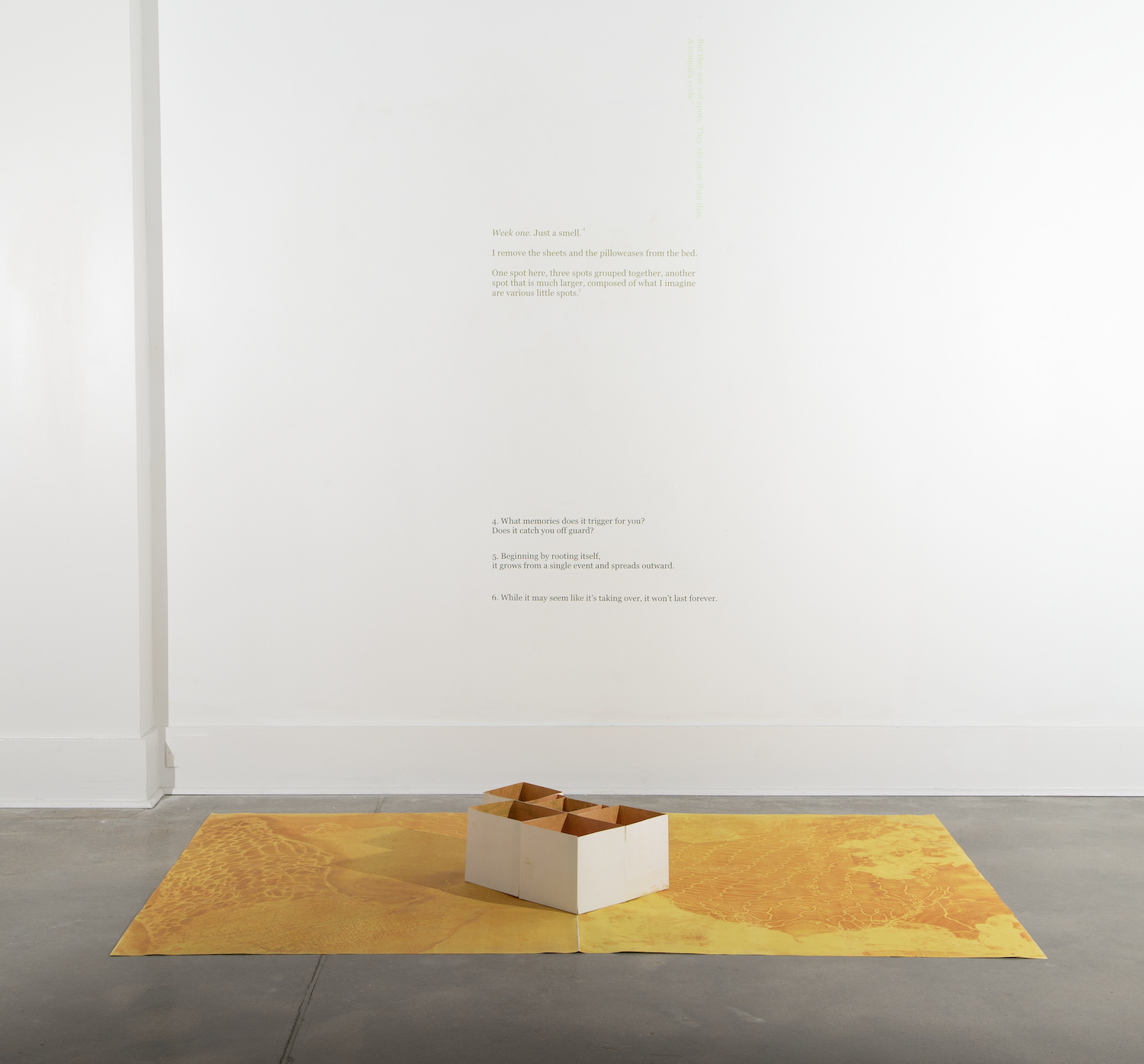


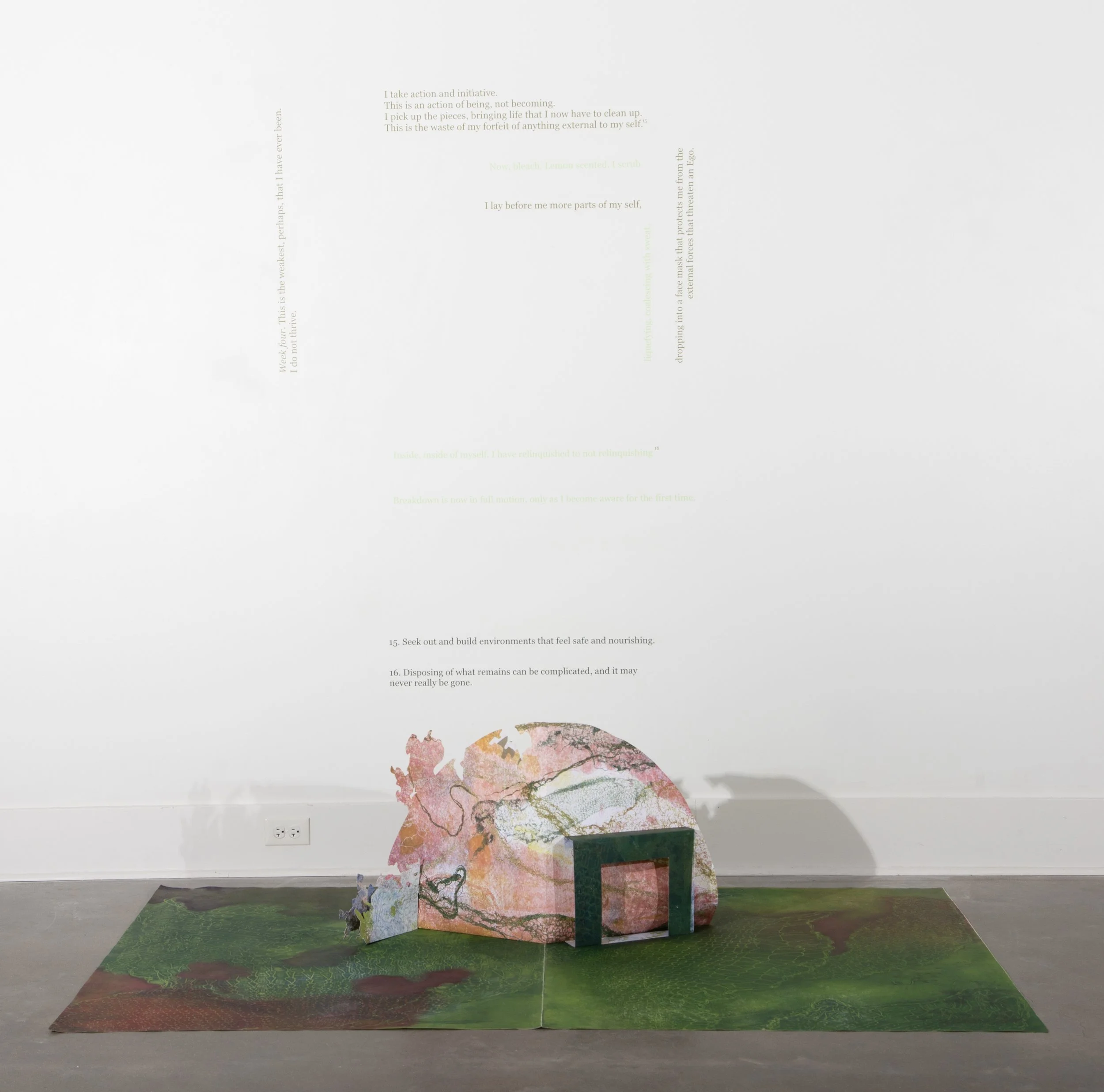
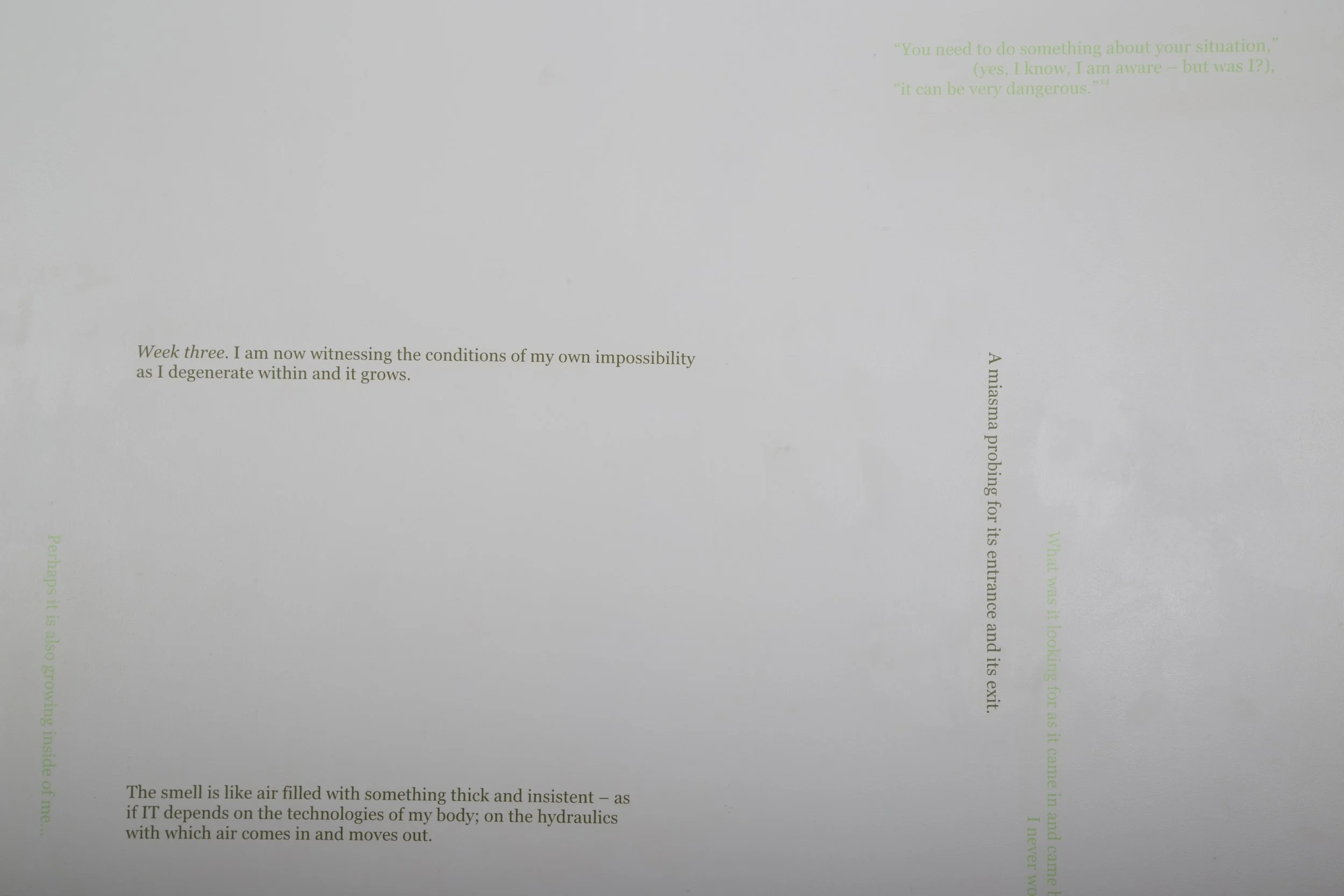


Loosely written footnotes thread throughout the piece, offering instructions for how to remove mold. Meditative and intimate in tone, they blur the line between technical guidance and emotional coping. Read alongside the more structured main text, these footnotes begin to resemble a kind of accidental self-help—offering quiet support, and suggesting that repair, whether of space or self, is always incomplete, always ongoing.
Knit forms and unraveling yarn creep through the spreads, evoking the persistence of depression and the seductive pull of obsessive thought. These fibers blur boundaries between interior and exterior, self and environment. As containment gives way to disorder, the work asks: What is a book? Can reading become immersive, bodily, inhabited? The Mold Garden invites viewers to read through movement and presence—walking across language, witnessing the breakdown of space.
Allusions to The Yellow Wallpaper by Charlotte Perkins Gilman deepen the show’s feminist inquiry into mental health, containment, and collapse. Like Gilman’s narrator, the protagonist of The Mold Garden is consumed by her surroundings—her environment both a mirror and a catalyst for psychological unraveling.
Ultimately, The Mold Garden is about the intimacy of collapse—and the dangerous, alluring beauty of grief. It asks what grows in the aftermath of breakdown, and how stories move through space in unpredictable ways.