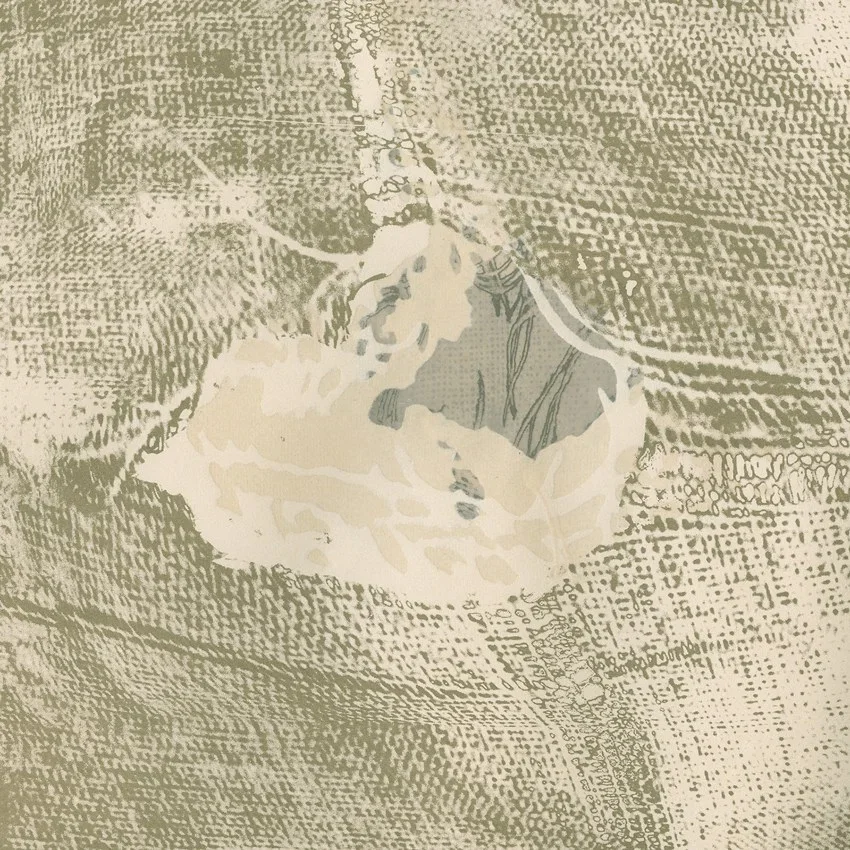
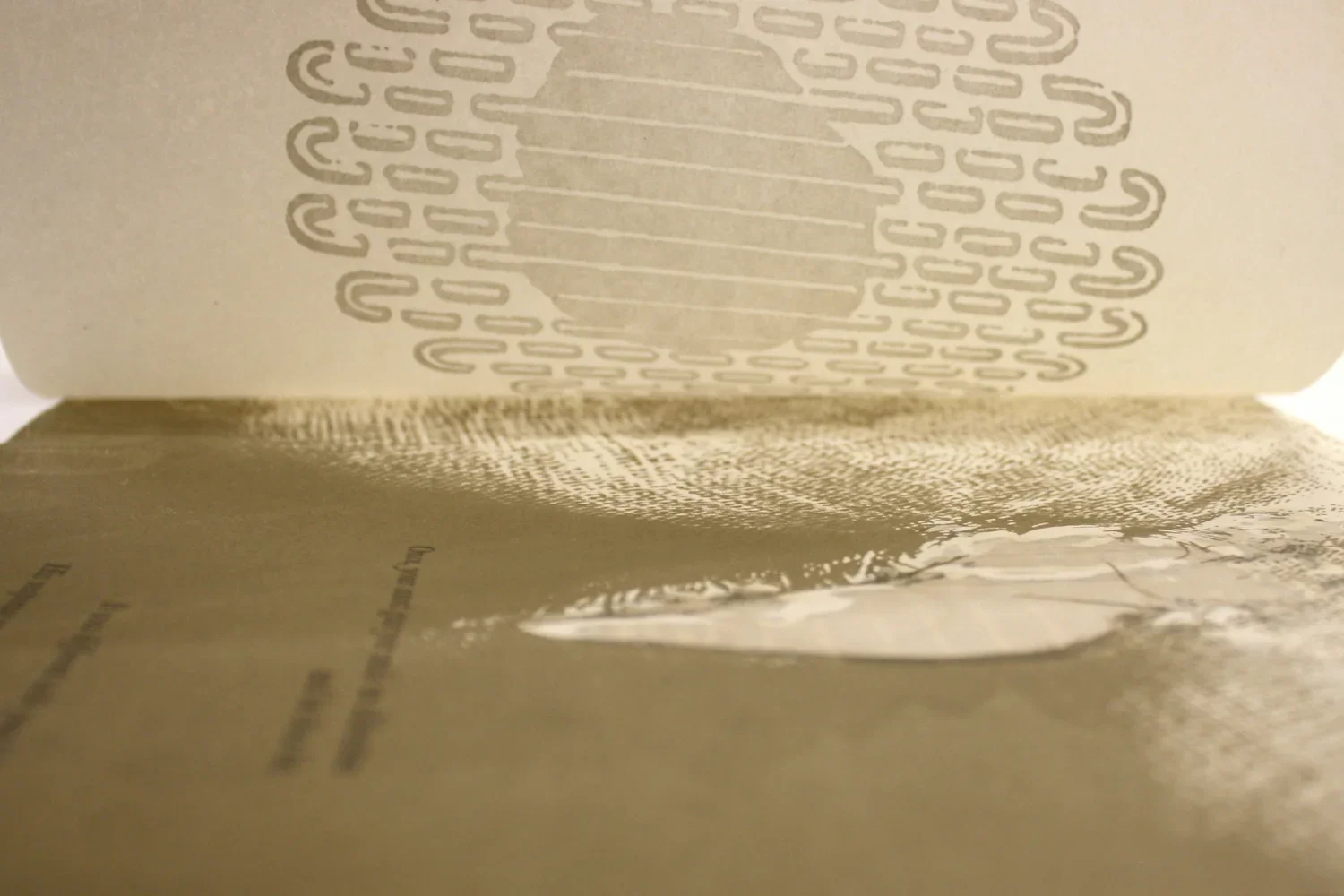
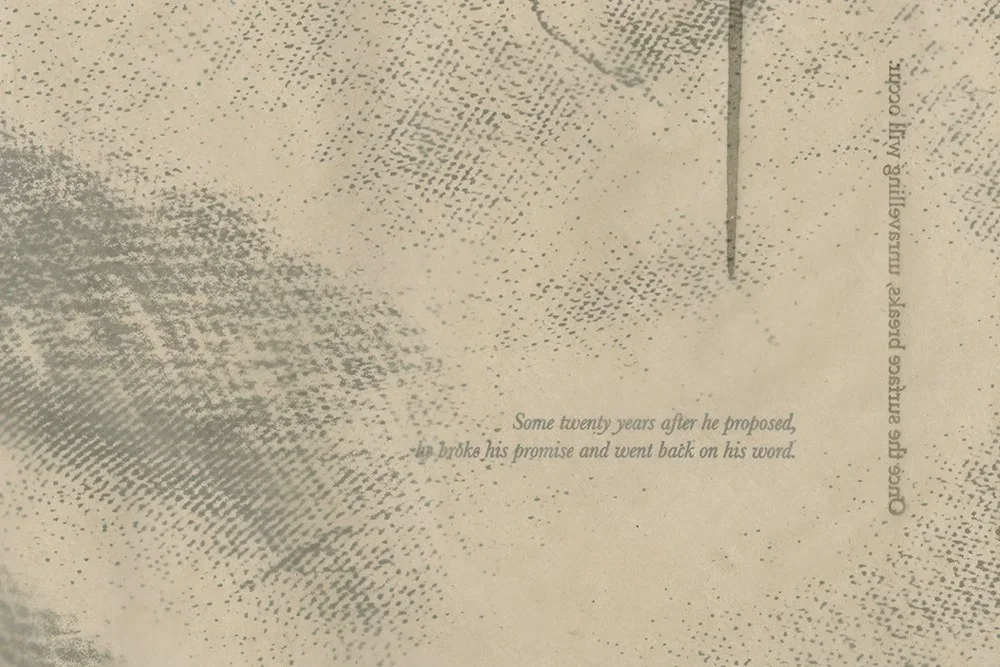
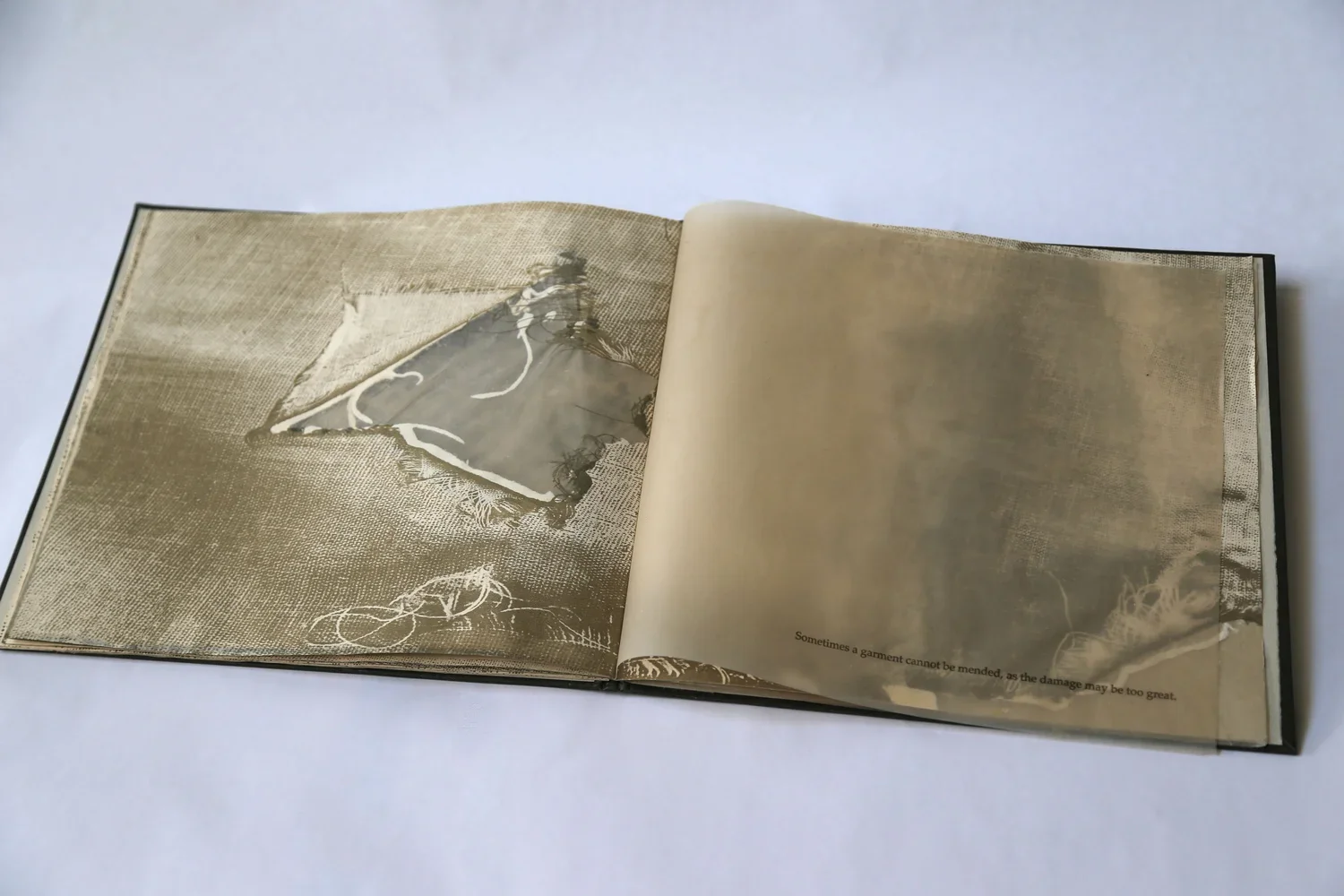
Silk screen, letterpress, and blowouts on handmade abaca and cotton paper (2017) 10” x 11”
This book explores the concept of an invisible mend, contrasting the mend of a garment with the attempt to mend a relationship.
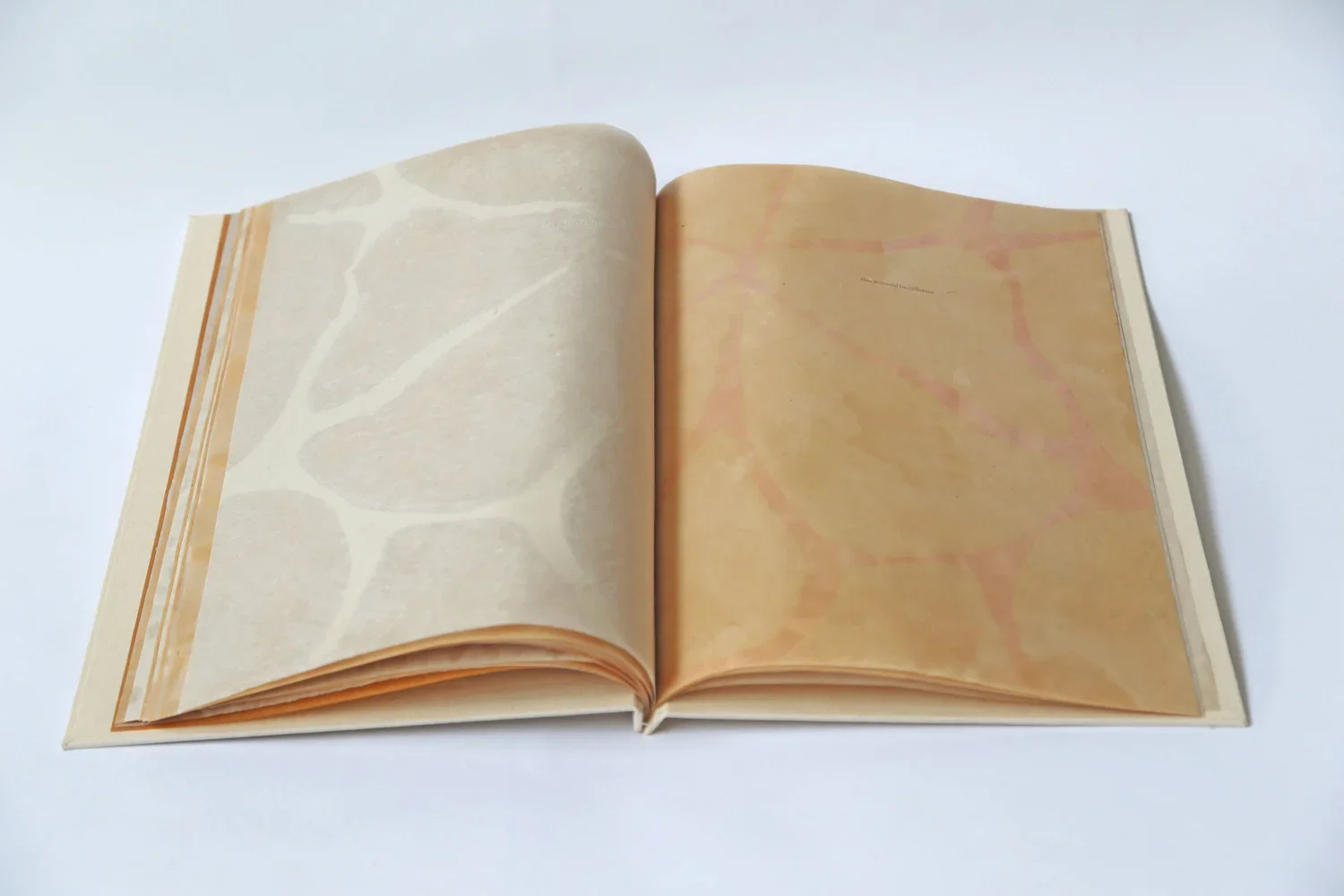
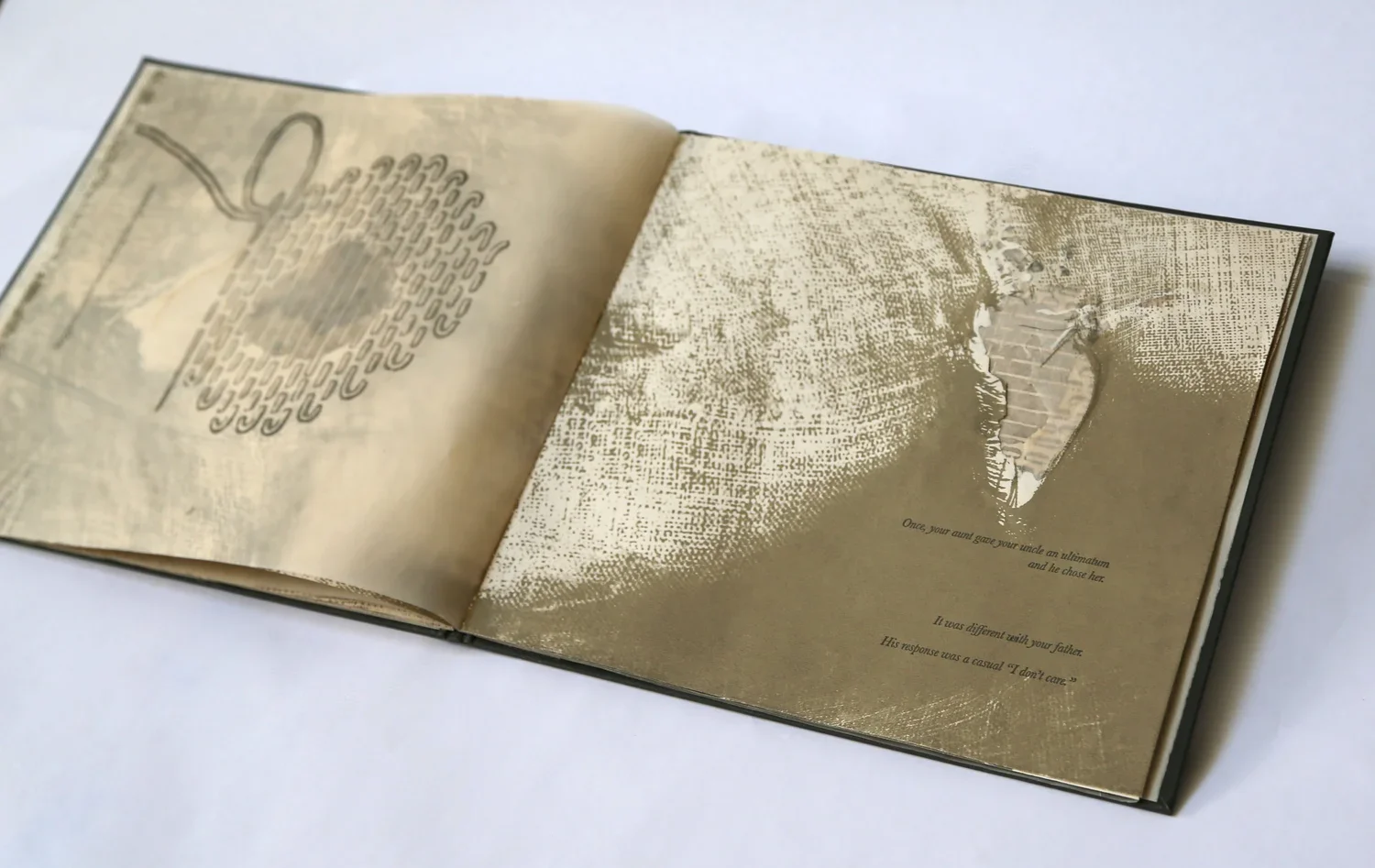
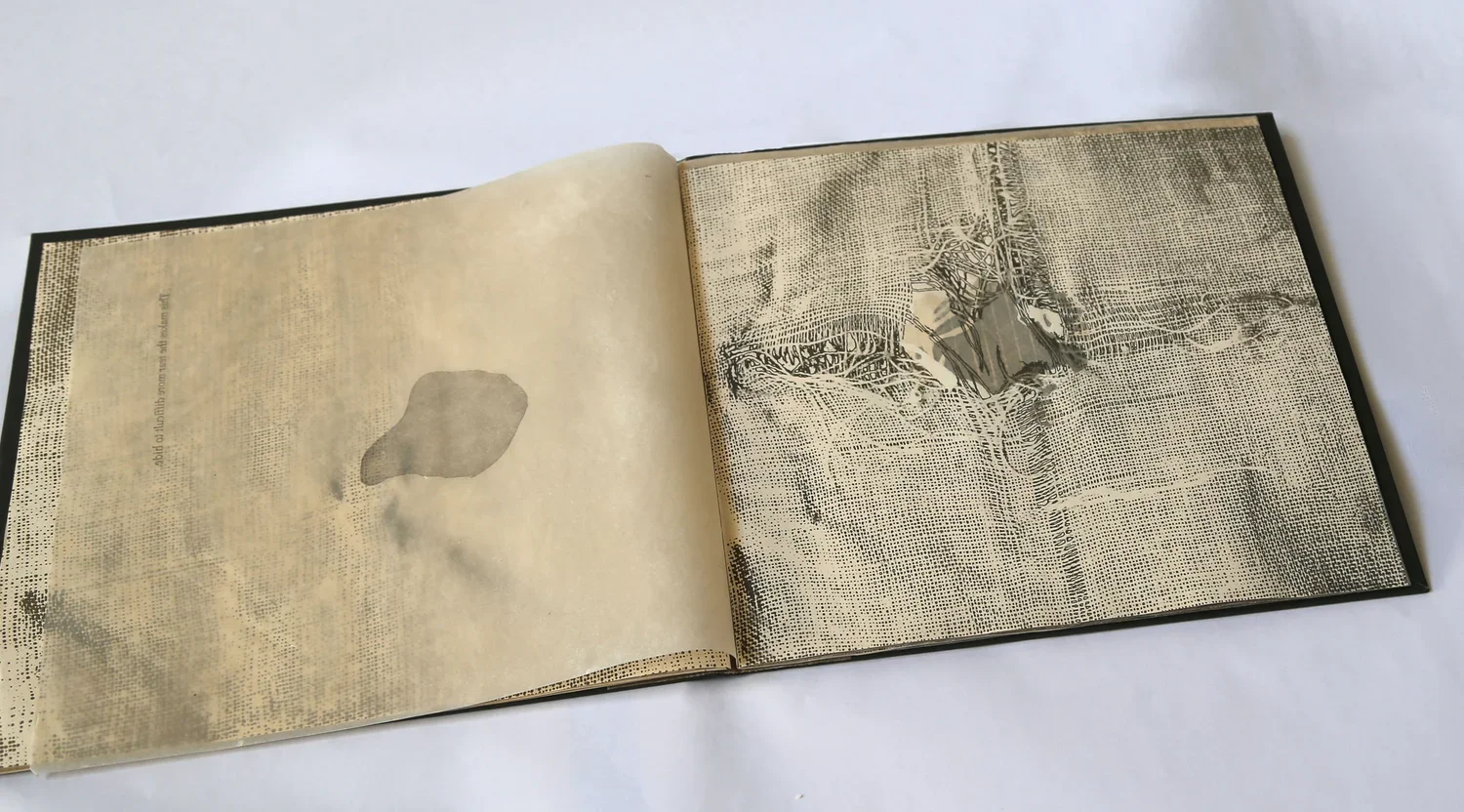
A darning stitch is a sewing technique used for repairing worn areas in fabric, an attempt to make the repair as neat and invisible as possible to restore a piece of clothing to its original state. Instructions and diagrams for darning are printed on overbeaten abaca paper, while on cotton paper are images of fabric alongside a narrative of a marriage. The cotton spreads are visible beneath the translucent abaca sheets, juxtaposing this story against the clear and straightforward instructions for mending clothing.
The images of torn cloth are created using the blowout technique, further emphasizing the moments of damage and wear both within the fabric and within the relationship.
Published by Women's Studio workshop. This book was made possible through an artist residency and the Artist's Book Grant from WSW, in addition to a Project Assistance Grant from College Book Arts Association. The book is 44 pages and the edition size is 47.
Silk screen, letterpress, and blowouts on handmade abaca and cotton paper (2017) 10” x 11”
This book explores the concept of an invisible mend, contrasting the mend of a garment with the attempt to mend a relationship.
A darning stitch is a sewing technique used for repairing worn areas in fabric, an attempt to make the repair as neat and invisible as possible to restore a piece of clothing to its original state. Instructions and diagrams for darning are printed on overbeaten abaca paper, while on cotton paper are images of fabric alongside a narrative of a marriage. The cotton spreads are visible beneath the translucent abaca sheets, juxtaposing this story against the clear and straightforward instructions for mending clothing.
The images of torn cloth are created using the blowout technique, further emphasizing the moments of damage and wear both within the fabric and within the relationship.
Published by Women's Studio workshop. This book was made possible through an artist residency and the Artist's Book Grant from WSW, in addition to a Project Assistance Grant from College Book Arts Association. The book is 44 pages and the edition size is 47.
Silk screen, letterpress, and blowouts on handmade abaca and cotton paper (2017) 10” x 11”
This book explores the concept of an invisible mend, contrasting the mend of a garment with the attempt to mend a relationship.
A darning stitch is a sewing technique used for repairing worn areas in fabric, an attempt to make the repair as neat and invisible as possible to restore a piece of clothing to its original state. Instructions and diagrams for darning are printed on overbeaten abaca paper, while on cotton paper are images of fabric alongside a narrative of a marriage. The cotton spreads are visible beneath the translucent abaca sheets, juxtaposing this story against the clear and straightforward instructions for mending clothing.
The images of torn cloth are created using the blowout technique, further emphasizing the moments of damage and wear both within the fabric and within the relationship.
Published by Women's Studio workshop. This book was made possible through an artist residency and the Artist's Book Grant from WSW, in addition to a Project Assistance Grant from College Book Arts Association. The book is 44 pages and the edition size is 47.
Silk screen, letterpress, and blowouts on handmade abaca and cotton paper (2017) 10” x 11”
This book explores the concept of an invisible mend, contrasting the mend of a garment with the attempt to mend a relationship.
A darning stitch is a sewing technique used for repairing worn areas in fabric, an attempt to make the repair as neat and invisible as possible to restore a piece of clothing to its original state. Instructions and diagrams for darning are printed on overbeaten abaca paper, while on cotton paper are images of fabric alongside a narrative of a marriage. The cotton spreads are visible beneath the translucent abaca sheets, juxtaposing this story against the clear and straightforward instructions for mending clothing.
The images of torn cloth are created using the blowout technique, further emphasizing the moments of damage and wear both within the fabric and within the relationship.
Published by Women's Studio workshop. This book was made possible through an artist residency and the Artist's Book Grant from WSW, in addition to a Project Assistance Grant from College Book Arts Association. The book is 44 pages and the edition size is 47.
Silk screen, letterpress, and blowouts on handmade abaca and cotton paper (2017) 10” x 11”
This book explores the concept of an invisible mend, contrasting the mend of a garment with the attempt to mend a relationship.
A darning stitch is a sewing technique used for repairing worn areas in fabric, an attempt to make the repair as neat and invisible as possible to restore a piece of clothing to its original state. Instructions and diagrams for darning are printed on overbeaten abaca paper, while on cotton paper are images of fabric alongside a narrative of a marriage. The cotton spreads are visible beneath the translucent abaca sheets, juxtaposing this story against the clear and straightforward instructions for mending clothing.
The images of torn cloth are created using the blowout technique, further emphasizing the moments of damage and wear both within the fabric and within the relationship.
Published by Women's Studio workshop. This book was made possible through an artist residency and the Artist's Book Grant from WSW, in addition to a Project Assistance Grant from College Book Arts Association. The book is 44 pages and the edition size is 47.
Silk screen, letterpress, and blowouts on handmade abaca and cotton paper (2017) 10” x 11”
This book explores the concept of an invisible mend, contrasting the mend of a garment with the attempt to mend a relationship.
A darning stitch is a sewing technique used for repairing worn areas in fabric, an attempt to make the repair as neat and invisible as possible to restore a piece of clothing to its original state. Instructions and diagrams for darning are printed on overbeaten abaca paper, while on cotton paper are images of fabric alongside a narrative of a marriage. The cotton spreads are visible beneath the translucent abaca sheets, juxtaposing this story against the clear and straightforward instructions for mending clothing.
The images of torn cloth are created using the blowout technique, further emphasizing the moments of damage and wear both within the fabric and within the relationship.
Published by Women's Studio workshop. This book was made possible through an artist residency and the Artist's Book Grant from WSW, in addition to a Project Assistance Grant from College Book Arts Association. The book is 44 pages and the edition size is 47.
A Darning Stitch (2017). Silk screen, letterpress, and blowouts on handmade abaca and cotton paper (2017) 10” x 11”.
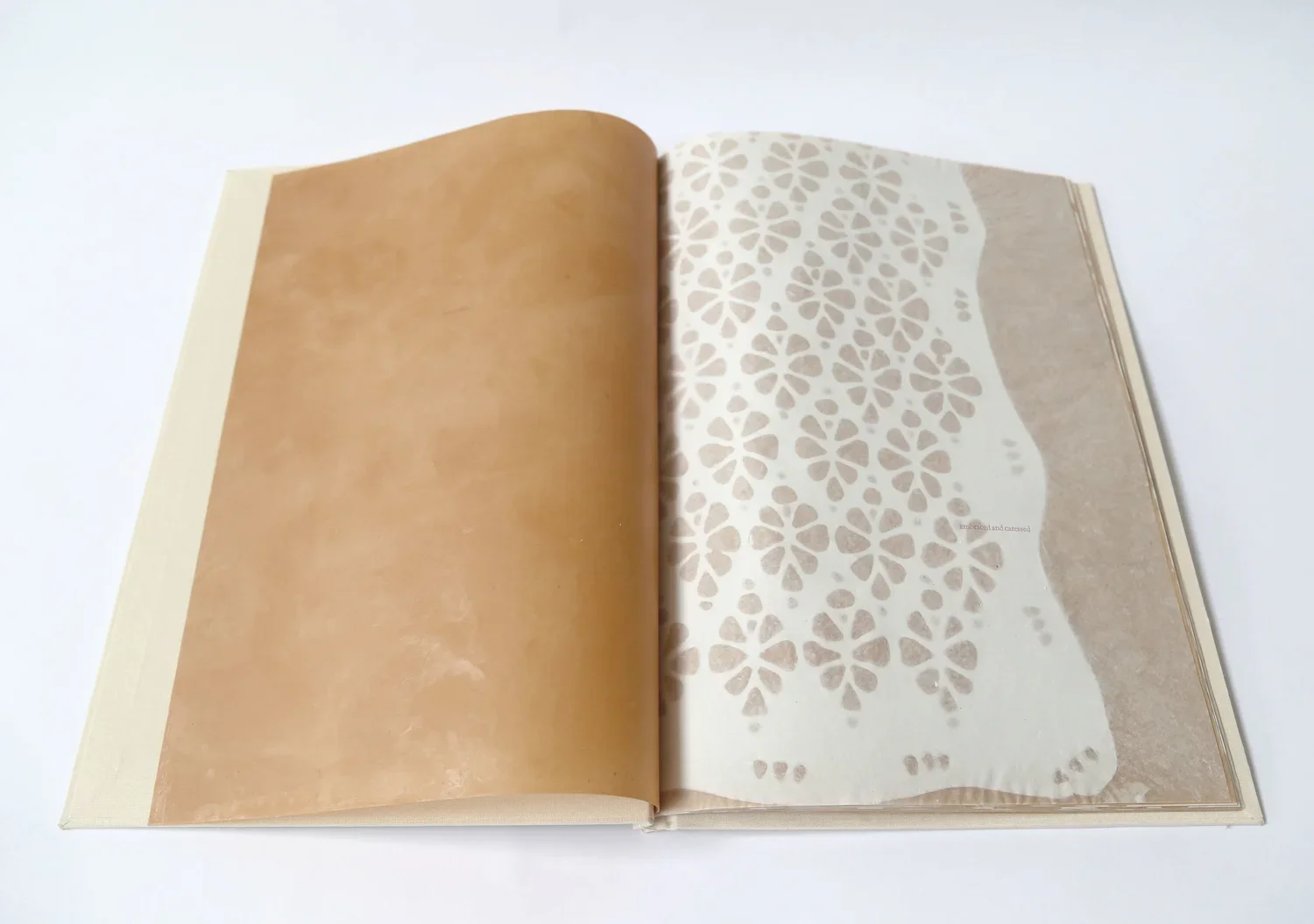
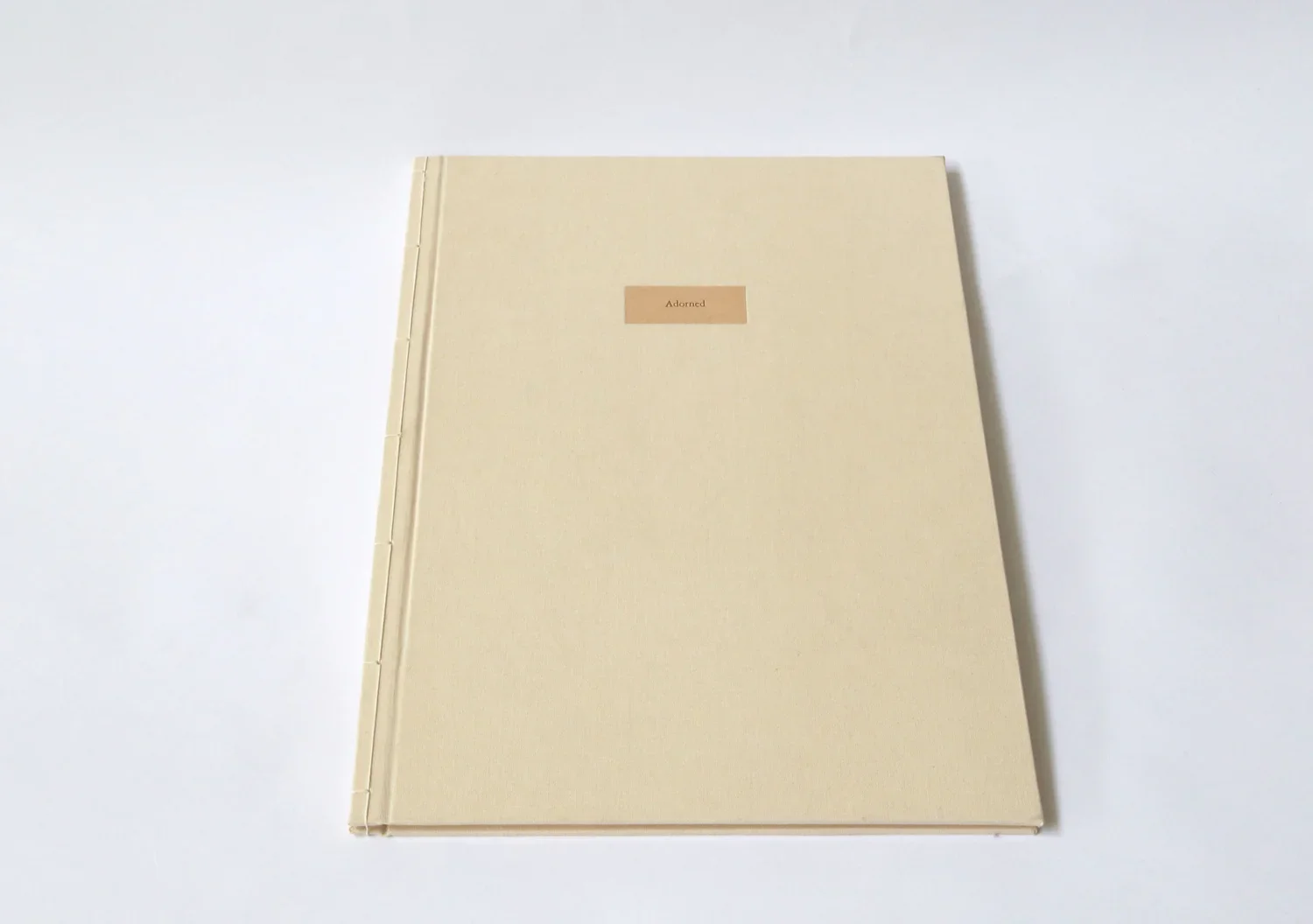
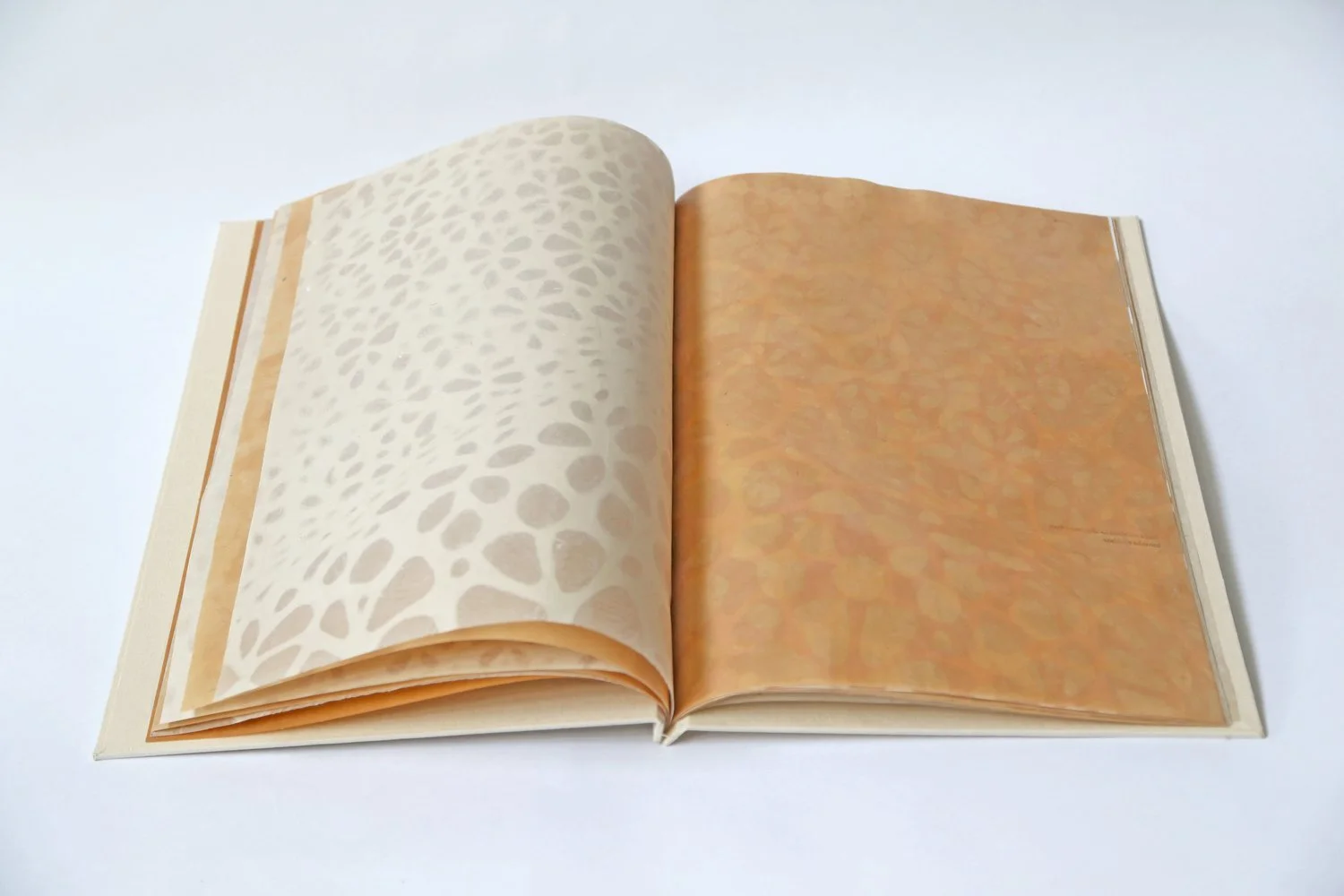
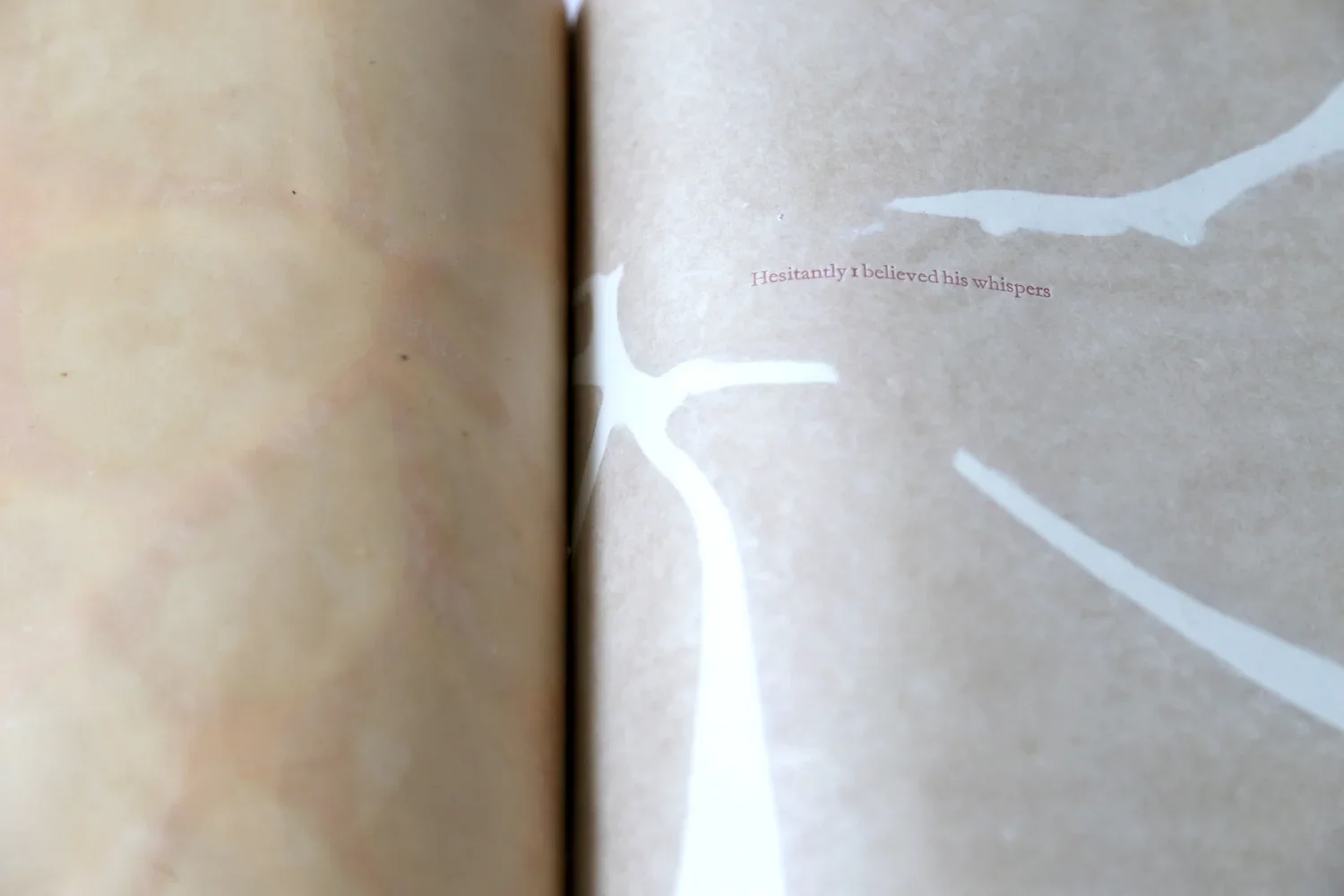
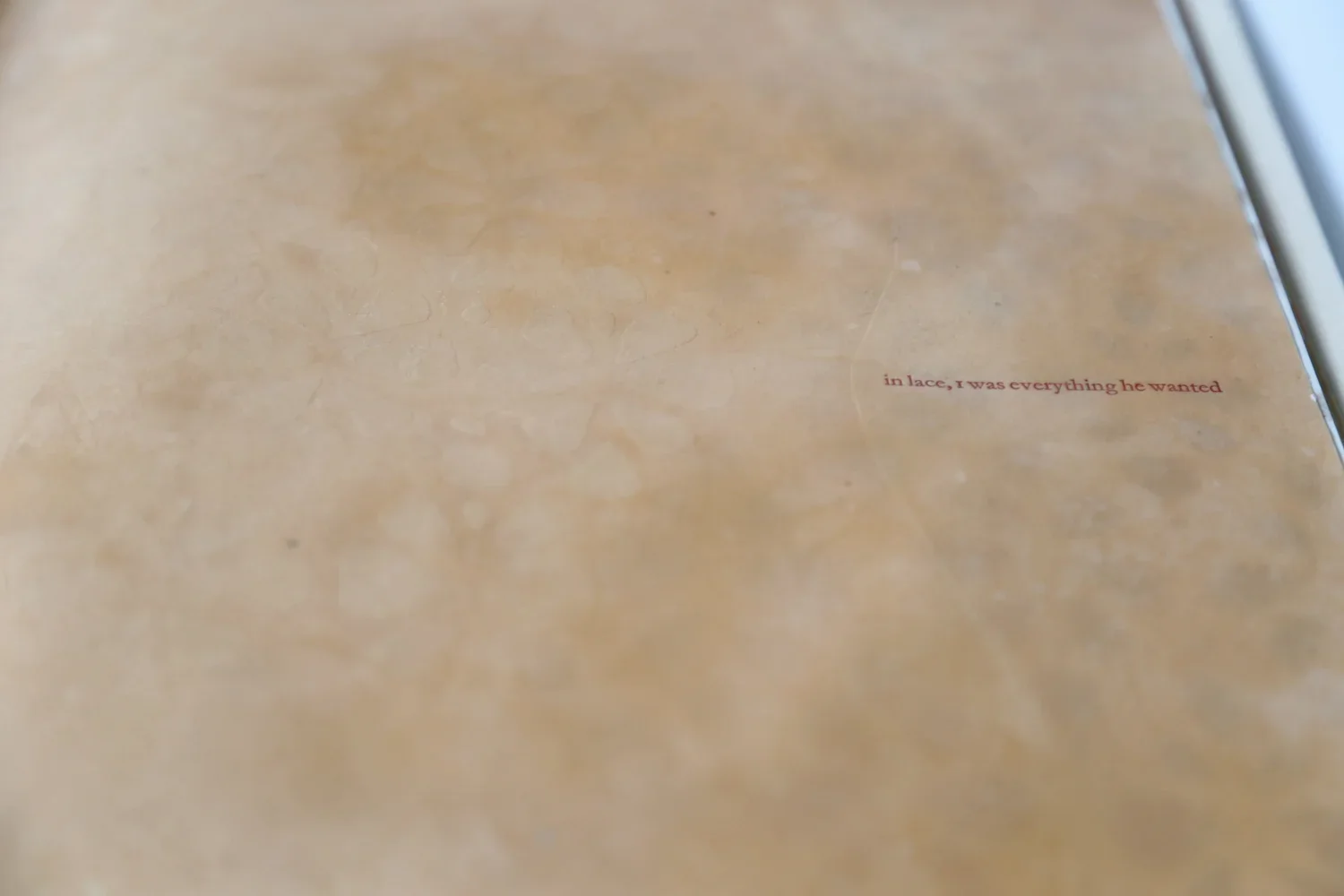
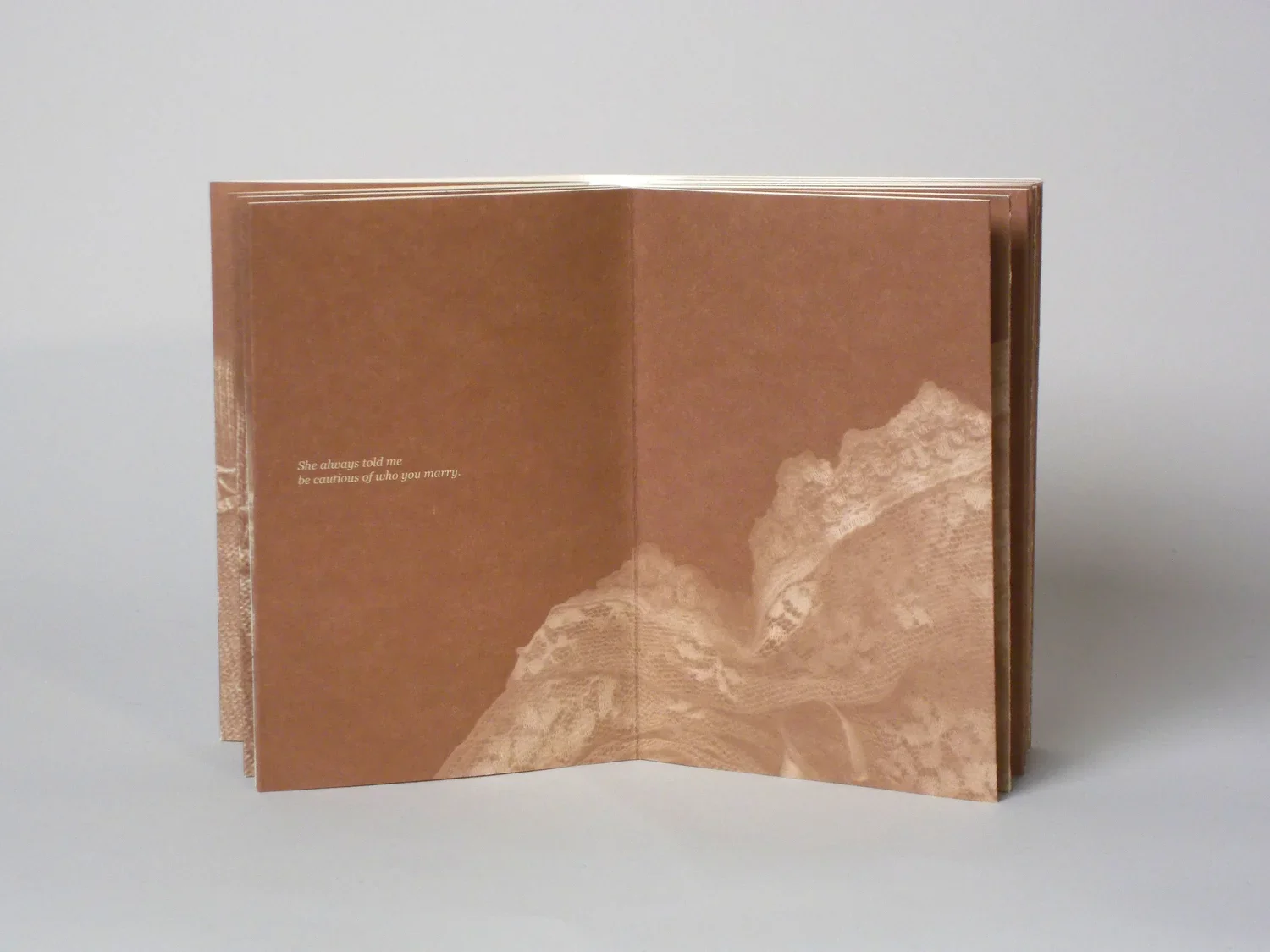
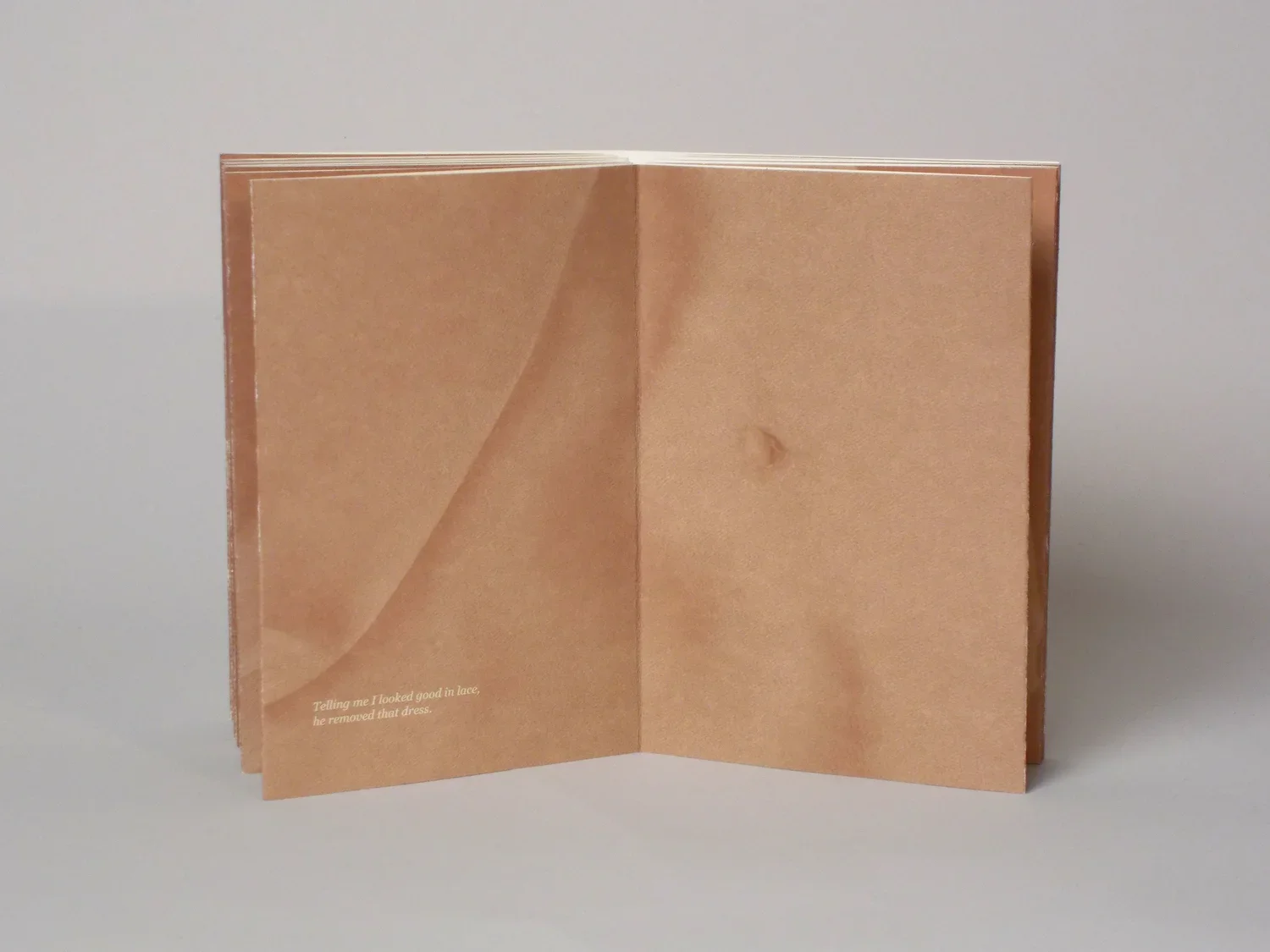
The inspiration for this book comes from considering the way clothing imposes and impresses itself on the body. The pages alternate between cotton blowouts of lace patterns on translucent abaca and flesh toned sheets of paper embossed with the same pattern. Throughout the book, although the garment begins to deteriorate, the flesh below continues to carry the mark of the fabric; even once the lace is gone completely. The progression of the book mimics the way remnants of our experiences exist with us in the present, despite the moment being over and gone. The text explores how an experience can mark you and make it difficult to move forward without the expectation that history will repeat itself.
This book was created while in residence at the Minnesota Center for Book Arts during the late summer of 2015. It was bound in 2016.
The inspiration for this book comes from considering the way clothing imposes and impresses itself on the body. The pages alternate between cotton blowouts of lace patterns on translucent abaca and flesh toned sheets of paper embossed with the same pattern. Throughout the book, although the garment begins to deteriorate, the flesh below continues to carry the mark of the fabric; even once the lace is gone completely. The progression of the book mimics the way remnants of our experiences exist with us in the present, despite the moment being over and gone. The text explores how an experience can mark you and make it difficult to move forward without the expectation that history will repeat itself.
This book was created while in residence at the Minnesota Center for Book Arts during the late summer of 2015. It was bound in 2016.
The inspiration for this book comes from considering the way clothing imposes and impresses itself on the body. The pages alternate between cotton blowouts of lace patterns on translucent abaca and flesh toned sheets of paper embossed with the same pattern. Throughout the book, although the garment begins to deteriorate, the flesh below continues to carry the mark of the fabric; even once the lace is gone completely. The progression of the book mimics the way remnants of our experiences exist with us in the present, despite the moment being over and gone. The text explores how an experience can mark you and make it difficult to move forward without the expectation that history will repeat itself.
This book was created while in residence at the Minnesota Center for Book Arts during the late summer of 2015. It was bound in 2016.
Adorned (2015-2016) Letterpress printing, blind embossing, and collographs on waxed handmade paper and cotton blowouts on abaca.
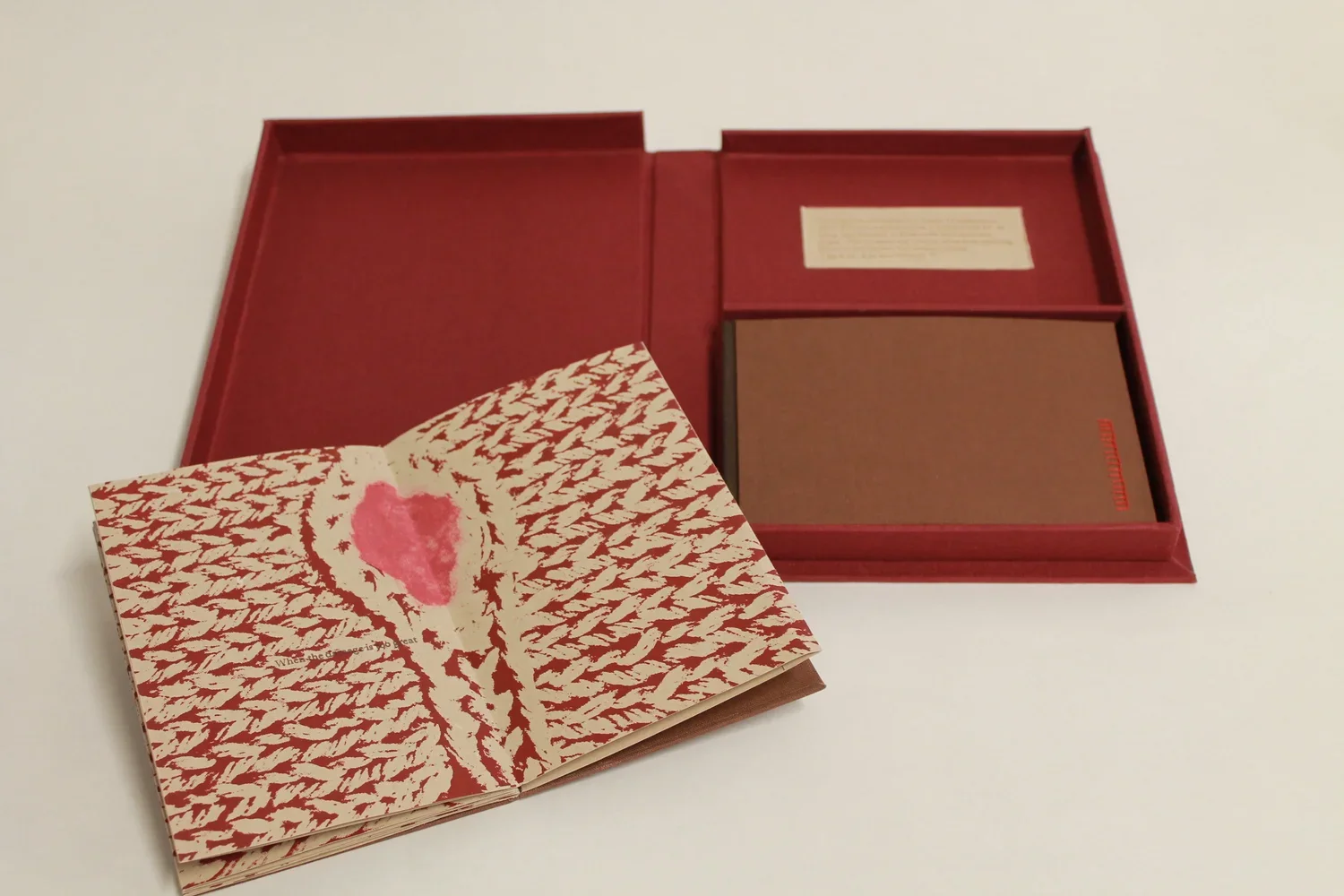
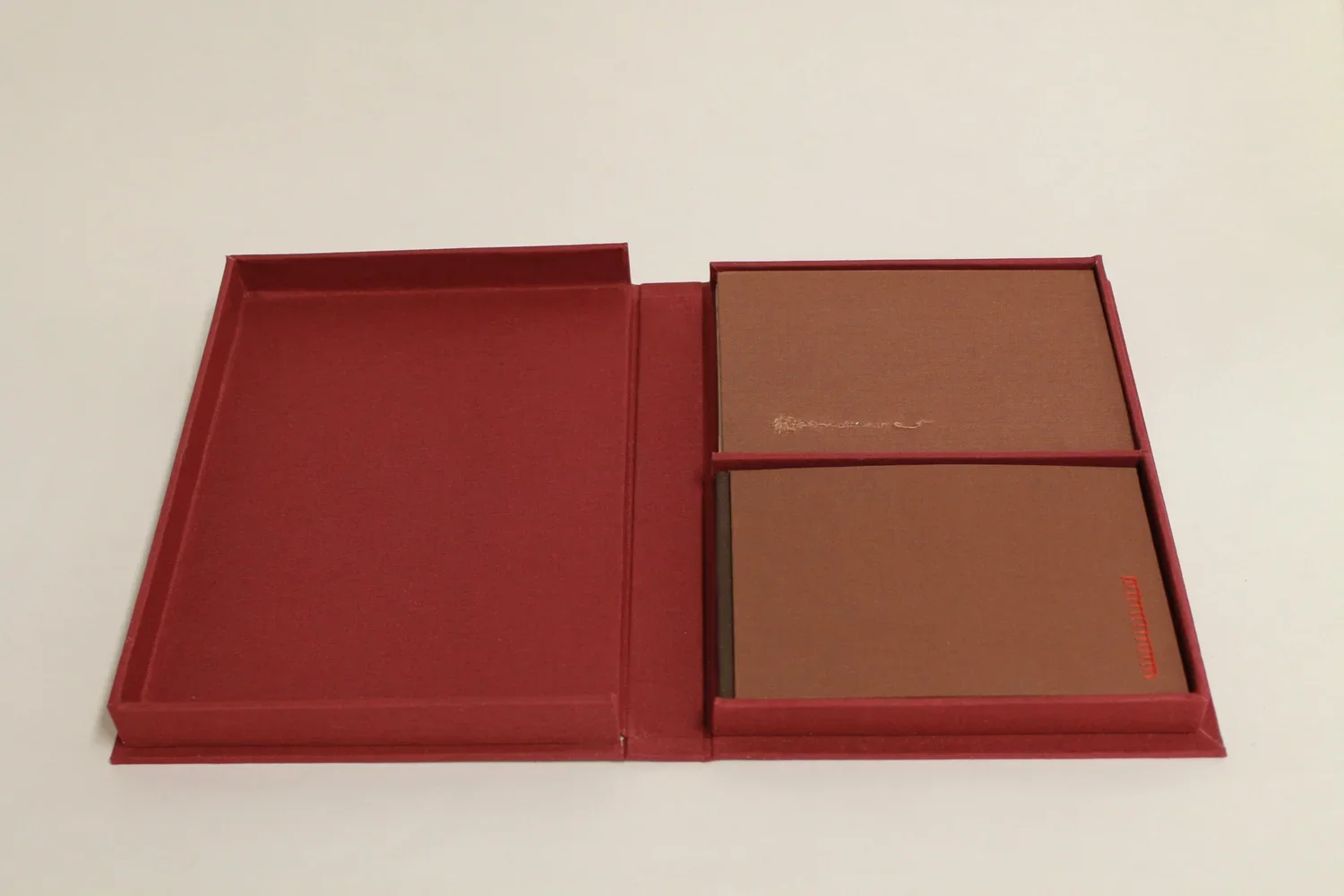
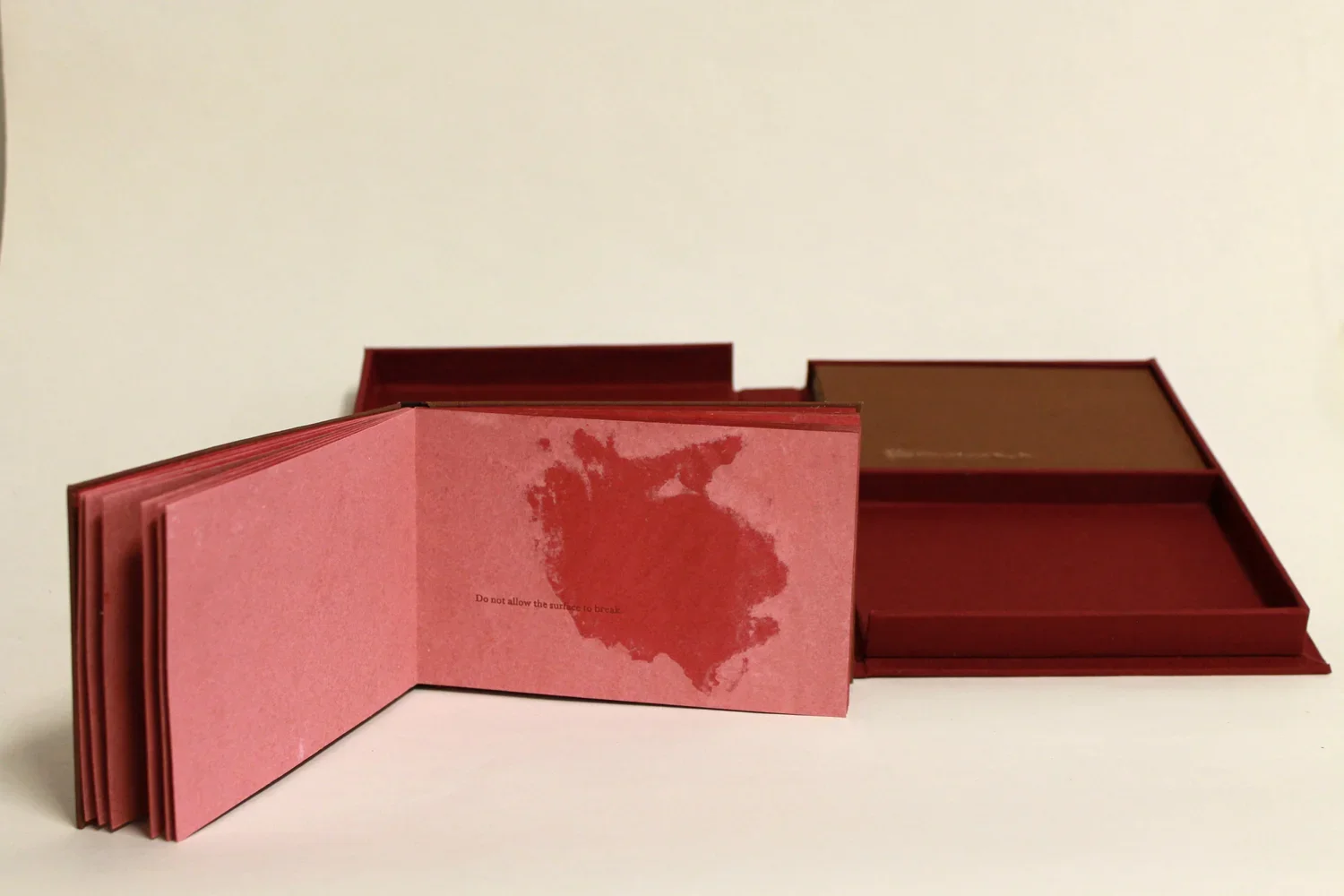
Consists of two books: a 6” x 4” accordion and a 4” x 6” drum leaf simple case bound book. The text was printed on a Vandercook SP-20 using type handset in 10 pt. Baskerville on handmade paper. The imagery was created using pulp painting, blowout techniques, and screen printing.
A darning stitch is used to create an invisible mend on clothing. Using ambiguous directions (based on darning instructions) as text, this work explores the idea of mending in relation to emotional ruptures and how to recover when the damage is too great.
Consists of two books: a 6” x 4” accordion and a 4” x 6” drum leaf simple case bound book. The text was printed on a Vandercook SP-20 using type handset in 10 pt. Baskerville on handmade paper. The imagery was created using pulp painting, blowout techniques, and screen printing.
A darning stitch is used to create an invisible mend on clothing. Using ambiguous directions (based on darning instructions) as text, this work explores the idea of mending in relation to emotional ruptures and how to recover when the damage is too great.
Consists of two books: a 6” x 4” accordion and a 4” x 6” drum leaf simple case bound book. The text was printed on a Vandercook SP-20 using type handset in 10 pt. Baskerville on handmade paper. The imagery was created using pulp painting, blowout techniques, and screen printing.
A darning stitch is used to create an invisible mend on clothing. Using ambiguous directions (based on darning instructions) as text, this work explores the idea of mending in relation to emotional ruptures and how to recover when the damage is too great.
Darning (2014) Pulp painting, blowout techniques, and screen printing on handmade paper.
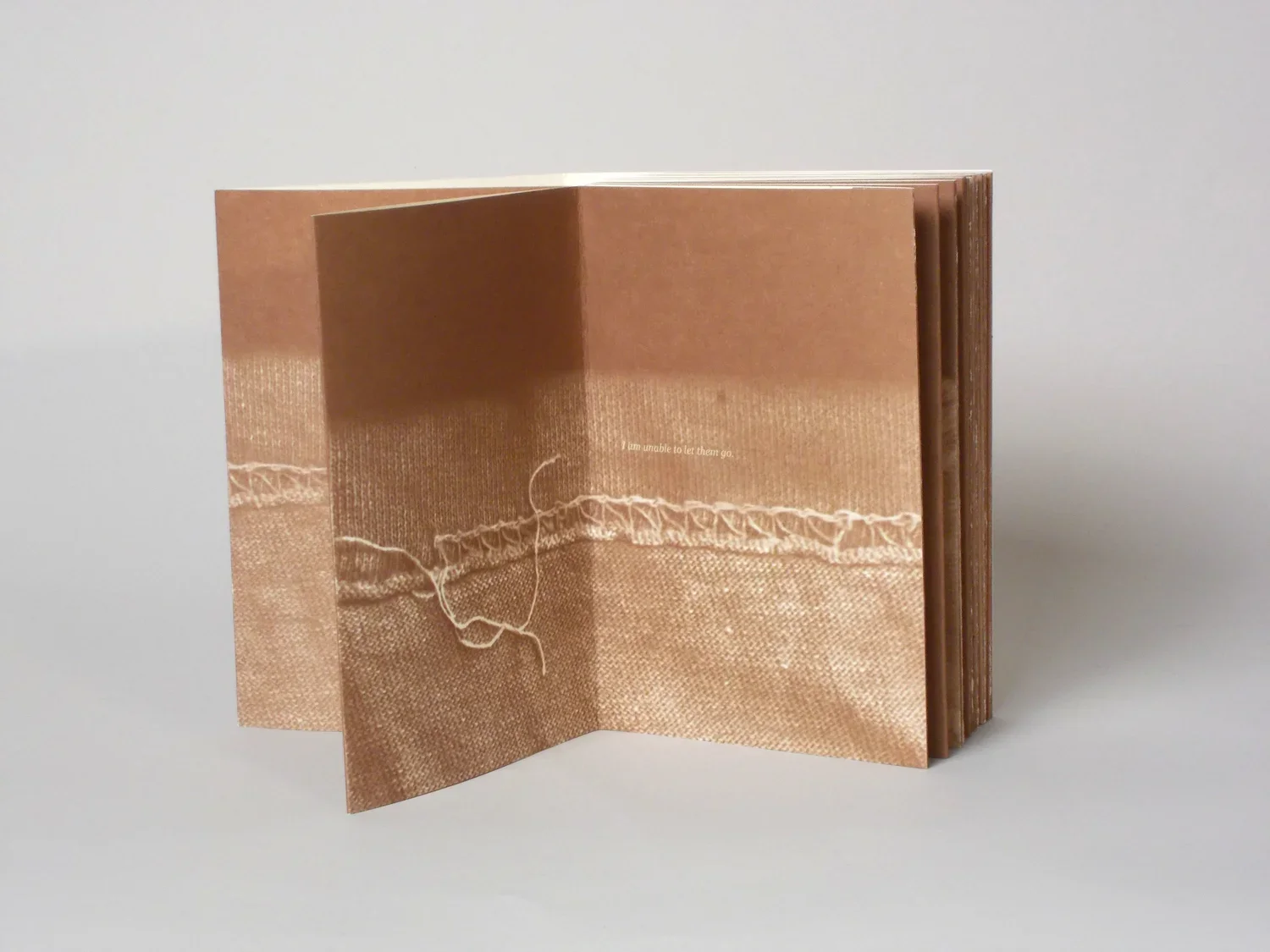
Offset Lithography, printed in the Borowsky Center for Publication Arts at the University of the Arts, Philadelphia, PA (2014).
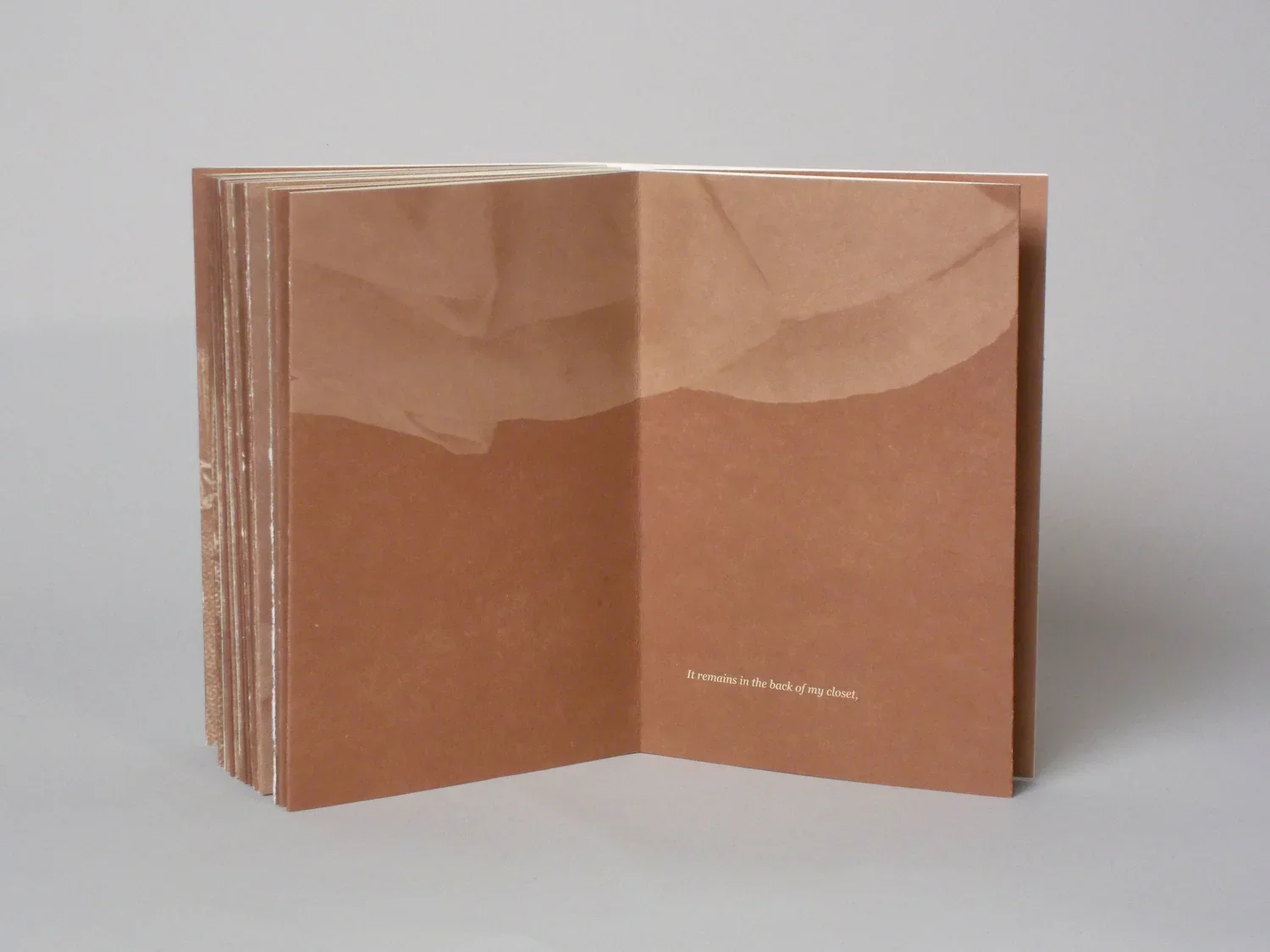
As Peter Stallybrass writes in his article Worn Worlds, clothing "receives us: receives our smells, our sweat, our shape even [...] holding our gestures." In contemplating the tattered clothing I have held onto over time, its functionality long gone, I consider the way clothing retains memory but also a ghostlike presence.
Offset Lithography, printed in the Borowsky Center for Publication Arts at the University of the Arts, Philadelphia, PA (2014).
As Peter Stallybrass writes in his article Worn Worlds, clothing "receives us: receives our smells, our sweat, our shape even [...] holding our gestures." In contemplating the tattered clothing I have held onto over time, its functionality long gone, I consider the way clothing retains memory but also a ghostlike presence.
Offset Lithography, printed in the Borowsky Center for Publication Arts at the University of the Arts, Philadelphia, PA (2014).
As Peter Stallybrass writes in his article Worn Worlds, clothing "receives us: receives our smells, our sweat, our shape even [...] holding our gestures." In contemplating the tattered clothing I have held onto over time, its functionality long gone, I consider the way clothing retains memory but also a ghostlike presence.
Offset Lithography, printed in the Borowsky Center for Publication Arts at the University of the Arts, Philadelphia, PA (2014).
As Peter Stallybrass writes in his article Worn Worlds, clothing "receives us: receives our smells, our sweat, our shape even [...] holding our gestures." In contemplating the tattered clothing I have held onto over time, its functionality long gone, I consider the way clothing retains memory but also a ghostlike presence.
Vestige (2014). Offset Lithography, printed in the Borowsky Center for Publication Arts at the University of the Arts, Philadelphia, PA