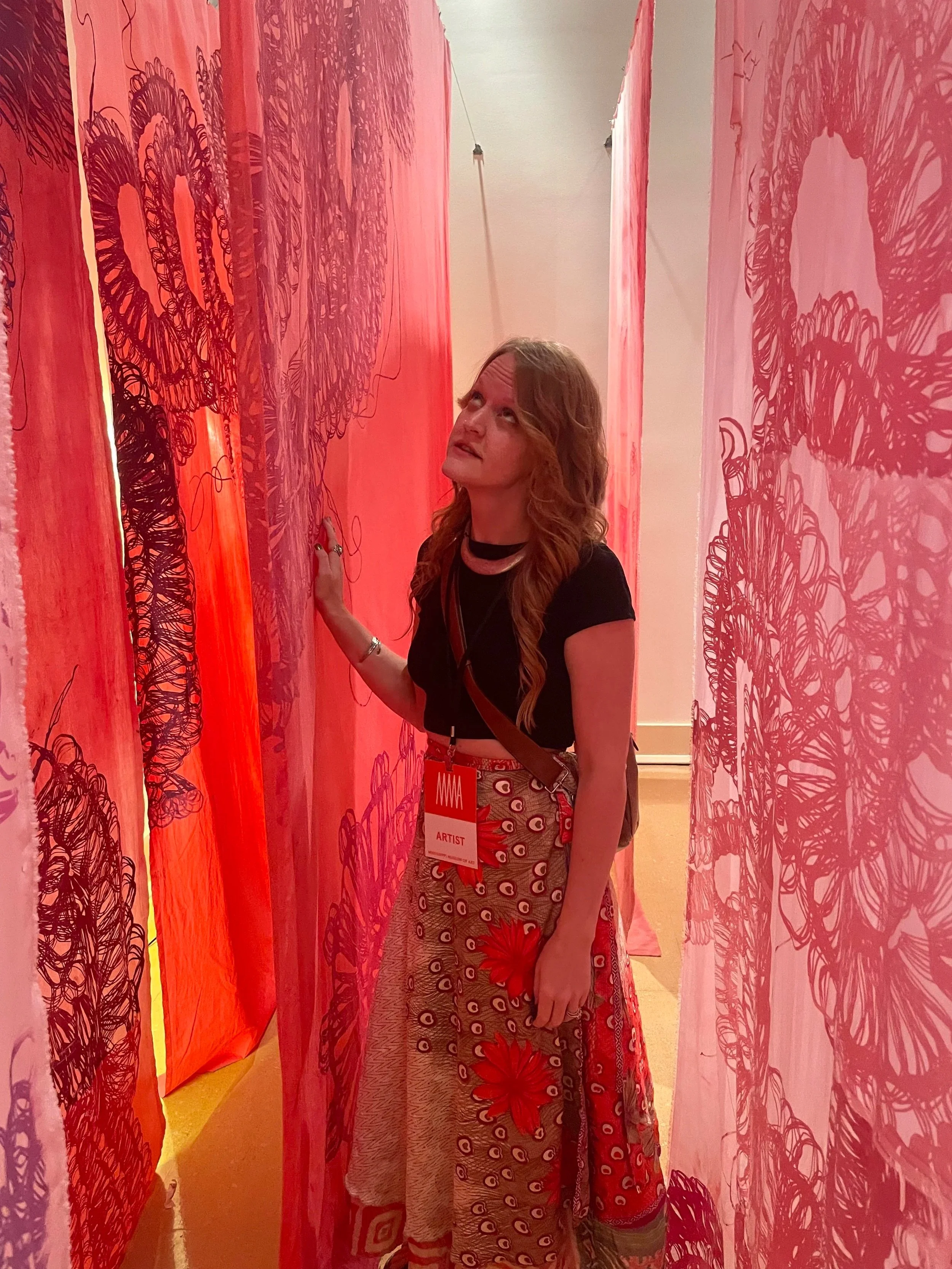
About the artist
Sue Carrie Drummond b. 1990, Santa Ana, El Salvador
Sue Carrie Drummond is a papermaker, printmaker, and book artist. She’s currently an Associate Professor of Art and Chair of the Art Department at Millsaps College in Jackson, MS.
Drummond was the recipient of the Artist’s Book Residency Grant at Women’s Studio Workshop in upstate New York in 2017. She’s been an artist-in-residence at Sulfur Studios in Savannah, the Kimmel Nelson Harding Center in Nebraska City, at Penland School of Crafts outside of Asheville, and at Minnesota Center for Book Arts in Minneapolis. She’s taught workshops at Women’s Studio Workshop, Pyramid Atlantic, Minnesota Center for Book Arts, and Sulfur Studios.
Drummond regularly shows her work in juried and curated exhibitions across the country and many of her pieces are included in special collections nationwide such as the Metropolitan Museum of Art, Library of Congress, and Harvard University. She also has pieces in the permanent collection at the Bainbridge Island Museum of Art in Bainbridge Island, Washington, and the Lauren Rogers Museum of Art in Laurel, Mississippi.
Drummond received her MFA in Book Arts and Printmaking at The University of the Arts in Philadelphia, PA in 2015. She graduated Phi Beta Kappa with Honors from Millsaps College in 2012 with a Bachelor of Arts in Studio Art and minors in Art History and Museum Studies.
STATEMENT
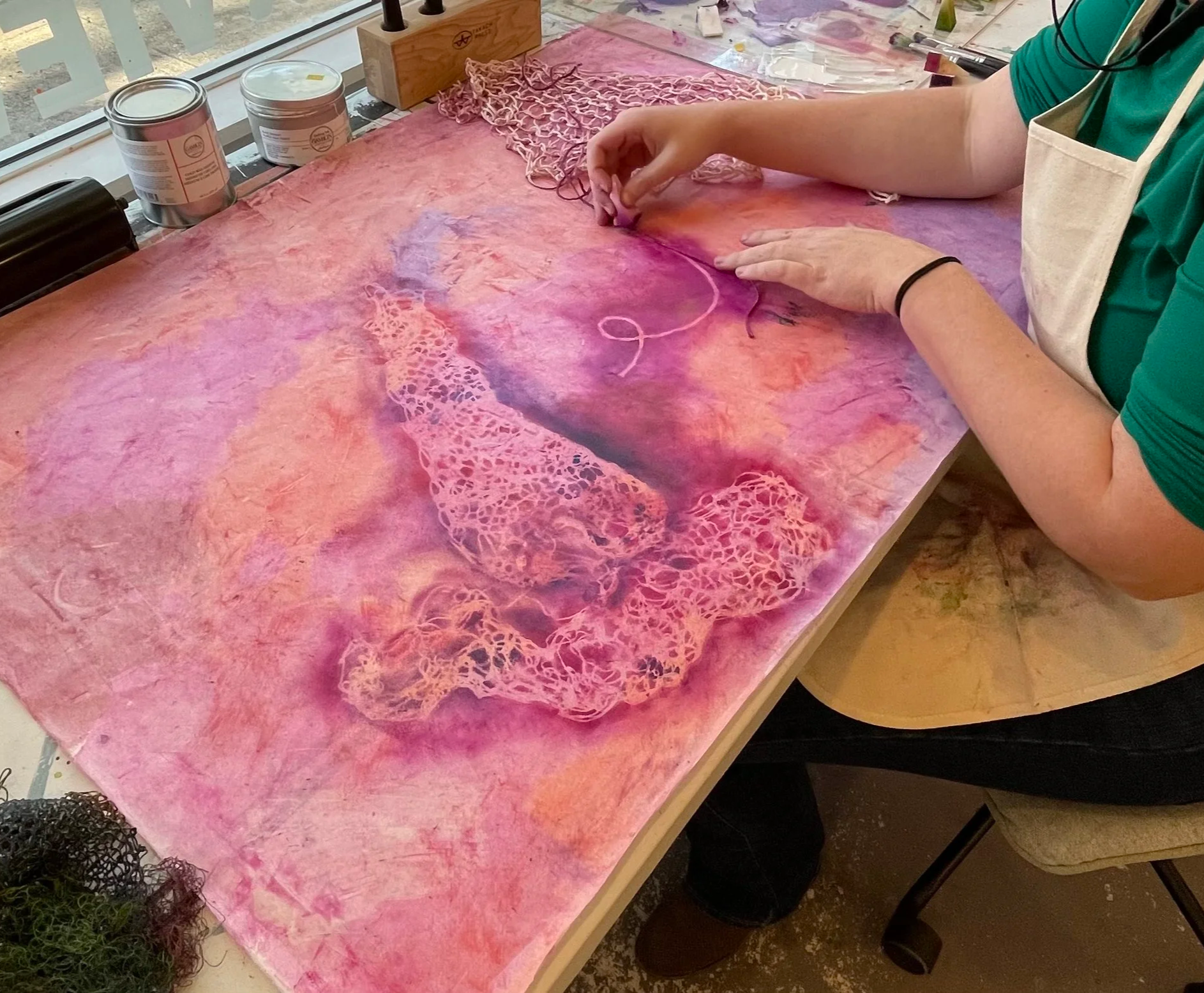
My artwork examines material culture, extracting tacit narratives from objects, surfaces, and ornamental forms. The potential for meaning in these materials is directly connected to the way they are shaped by use, labor, and time. Materials receive us, holding not just our personal histories but also broader cultural and historical narratives. Through processes of making, repetition, and transformation, they bear the traces of lived experience and reveal the ways identity, relationships, and systems of value become embedded within the physical world.
I am drawn to labor-intensive processes that require meticulous attention and repetition, such as papermaking, printmaking, and handwork. The care and attention required by these processes becomes visible in the finished work. As I work, I consistently consider surface. What sits above, within, or beneath? What is revealed or concealed? What is hidden, mended, constrained, or exposed? The physical layering of materials and processes throughout my work evokes the layers of memory, history, and meaning I investigate.